Winemaking · · 4 min read
Why we still choose French oak
Every few years someone suggests we try American oak, or steel, or amphora, or whatever the latest cellar fashion happens to be. We listen politely and then go back to Allier and Tronçais, the same two French forests we've bought from since the cellars were carved into the hill in 1992.
The reason is boring, in the best way: French oak from these two forests gives a tighter grain than most alternatives, which means it releases its character slowly. Vanilla and toast, yes, but in the background — support for the fruit, never a replacement for it. Our wines are meant to taste like the hillside first.
We also air-dry every barrel for two years before it ever touches wine. That's two years of a piece of wood sitting in the open, losing the harsher tannins and sharp edges that would otherwise fight with what's inside it. It's an expensive kind of patience — a new, properly seasoned barrel costs what you'd expect for two years of storage and a cooper's time — but it's the reason our eighteen months in barrel taste settled rather than raw.
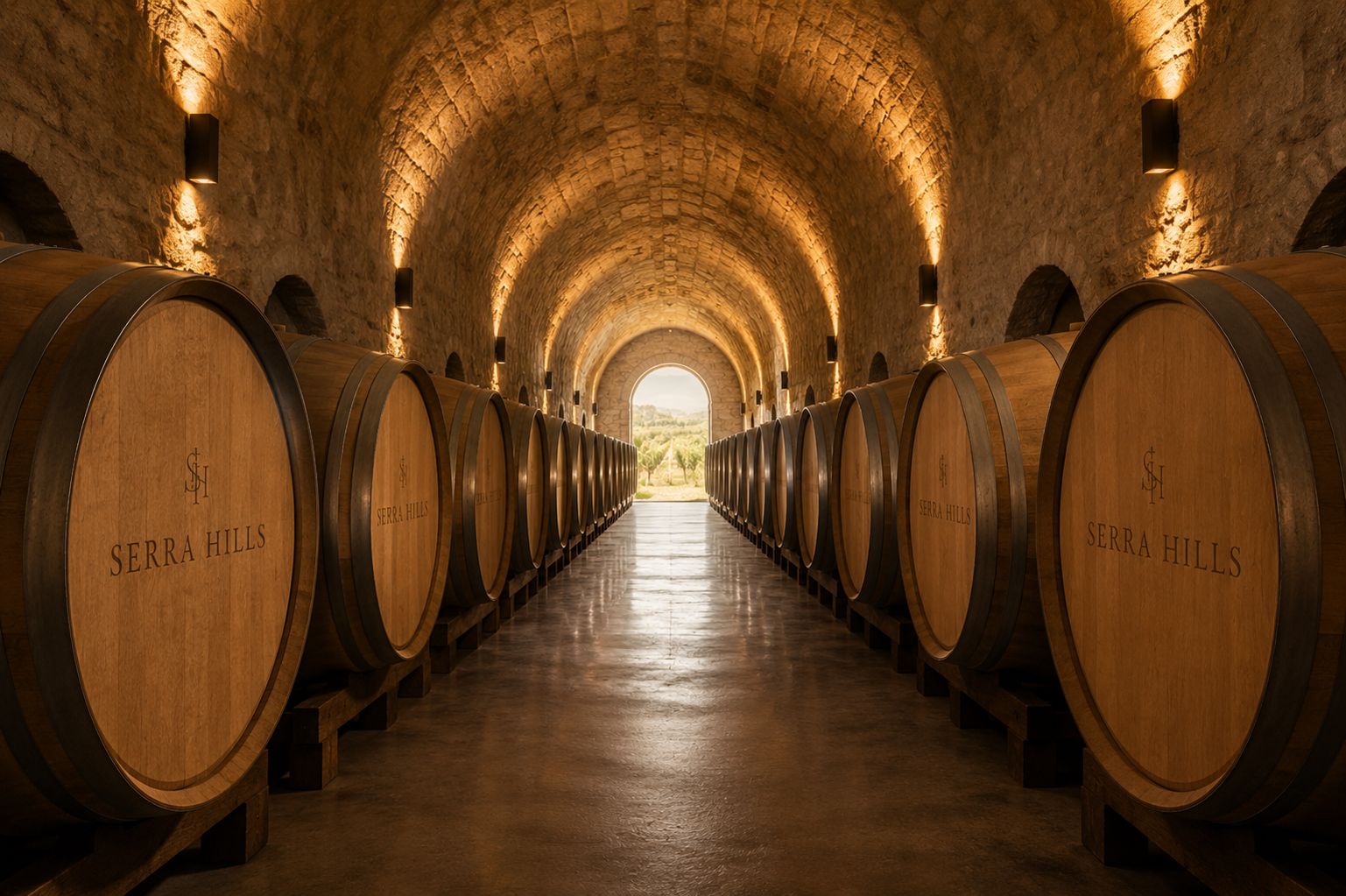
Eight hundred barrels live in the tunnel now, most of them a few vintages old, a few newly seasoned each year to replace what's retired. It's not a fashionable answer. It's just the one that keeps working.